


At the heart of global inequality lies a simple but often disguised truth: control over markets and control over materials determine who rises and who remains at the bottom of the global value chain.
Any country denied access to these two factors is structurally locked into underdevelopment. Yet this reality has long been masked by a convenient economic doctrine promoted by mainstream imperialist petty economists and institutions — comparative advantage. According to this theory, poorer countries should specialize in low-value production while wealthier nations dominate high-value industries, all under the pretense that free markets will benefit everyone.
History tells a very different story.
As long as imperialist countries dominate productivity, technology, and high-value manufacturing, comparative advantage is preached as an unquestionable truth. But the moment developing countries begin to climb the productivity ladder, improve efficiency, or threaten established dominance, this same doctrine is loudly abandoned.
Suddenly, the very countries that once insisted poorer nations should focus on agriculture and raw materials begin producing the same low-value goods themselves — not for domestic necessity, but to dump them into the markets of weaker economies, undermining local industries and locking them back into dependency.
Recent developments, such as the United States securing deals to sell cattle, chicks, and eggs to Ethiopia, illustrate this contradiction clearly. These are products that Ethiopia — like many African countries — can produce locally. Yet instead of supporting domestic production and food sovereignty, global market structures encourage import dependence, reinforcing external control over basic necessities.
The same pattern is evident in Africa’s energy sector.
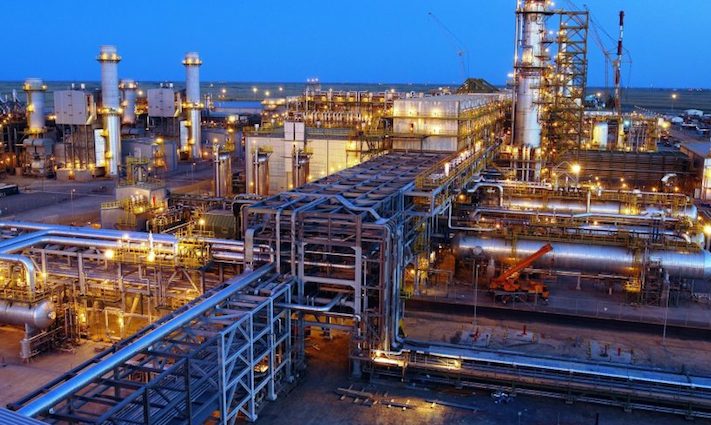
In Nigeria, foreign — largely Western — companies continue to dominate the crude oil sector, even denying crude to local refineries like Dangote. Substandard refined petroleum products, often produced in Europe, are dumped into the African markets, not only stifling Local refining for decades but also causing cancerous diseases resulting from their dangerous emissions. This arrangement persists not because Africa lacks oil, capital, or technical ability, but because control over refining and market access has been deliberately externalized.
This mirrors the situation in Venezuela, where the United States has repeatedly attempted to assert control over that country’s oil and mineral resources — not through market competition, but through intimidation, sanctions, and the use of military force. Here again, international law is violated, sovereignty is ignored, and the very principles imperial powers claim to uphold — such as free markets and fair competition — are conveniently discarded.
The hypocrisy is consistent.
As usual, supported by their intellectuals when imperialist countries are winning through global markets, free trade is presented as sacred and universal. Everyone is told to open their markets, liberalize their economies, and trust that prosperity will follow. But when others through independent policy begin to win — when productivity shifts, when value creation moves elsewhere — the same markets are suddenly described as distorted, oversupplied, or suffering from “excess capacity.”
What was once efficient competition becomes a problem.
What was once free trade becomes protectionism.
What was once economic theory becomes political panic.
This selective application of principles reveals the truth: global development and underdevelopment are not accidental outcomes of neutral markets, but the result of deliberate planning, structural control, and strategic denial of access.
The refusal to openly admit this reality is the greatest dishonesty of the modern global order. It masks a system designed not for shared prosperity, but for the planned development of some and the planned underdevelopment of others.
Until this reality is confronted directly — especially by countries in Africa and the Global South — the cycle will repeat itself, dressed in new language but driven by the same old power dynamics.
The African continent must therefore face this reality head on and start planning from inside, independent of western economists and institutions like the World Bank and IMF, plan from inside but more so confront the reality of Uniting Africa into a single Political Force. For without Political power which can only come from Unifying Africa, there is no ability anywhere of marshalling Africa’s enormous capacity to compete meaningfully on the international stage.
