


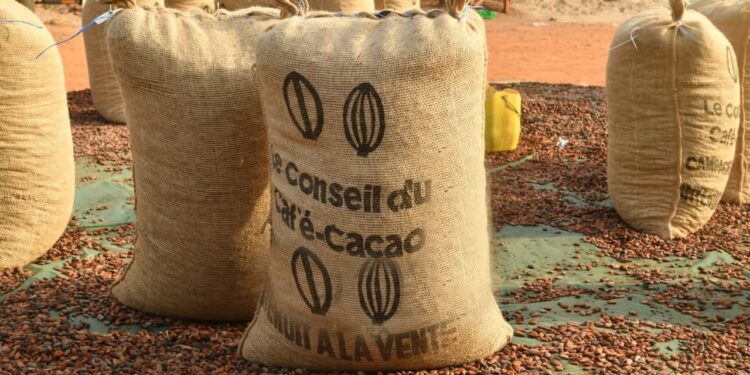
The recent cocoa price reduction in Ivory Coast—now taking effect—together with Ghana’s similar adjustment, is yet another reminder of why African countries must treat economic cooperation as a deliberate and strategic continental project.
The foremost reason is simple: relative bargaining power.
When African countries work together as coordinated producers of raw materials and cash crops—such as cocoa and coffee—they increase their leverage against the behemoth monopoly corporations that dominate the high-value end of the global supply chain. These corporations, largely based in Western capitals, control processing, branding, financing, and distribution, allowing them to extract maximum profit while producers remain at the bottom of the value chain.
With Africa positioned at the lower end of nearly all global production chains, it becomes inevitable that prices of commodities like cocoa beans and coffee beans will be manipulated. Those at the high-value end maximize profits at the expense of the farmers who till the soil and the nations that own the raw materials essential for global industries.
This structural imbalance is not accidental—it is built into the current global economic architecture.
Yet building cohesion among producers remains difficult when the camp itself is divided. When one government aligns too closely with external interests, collective bargaining weakens. Even where there may be willingness in one country to push for coordinated action, fragmentation undermines effectiveness.
The result is vulnerability—especially for citizens and farmers. When coordination fails, external pressures intensify. Cocoa price reductions in both Ghana and Ivory Coast, under global market pressures that ultimately benefit actors at the high end of the value chain, demonstrate what happens when collective resistance is not prioritized.
Working together, these countries could tip the balance of power. Acting separately, they absorb the pressure individually—and farmers pay the price.
For the African Continental Unity Party (ACUP), this issue must remain central. The sharp focus must be on building formidable solidarity among all states that produce strategic commodities capable of influencing global markets. Strengthening bargaining power through unity is not optional—it is essential.
At the same time, bargaining alone is insufficient.
The foremost priority must be the mobilization of local resources to transform cash crops and raw materials into high-value finished goods. Initially, this production should satisfy local and African markets. From there, expansion into Global South markets—China, India, and the Middle East—should follow.
There is no sustainable alternative to this path if Africa intends to escape continued exploitation.
To challenge the dominance of monopoly Western corporations, Africa must also encourage the emergence of multiple domestic players. This includes empowering the local private sector, mobilizing African diaspora capital, and deploying the combined strategic resources of African states. A diversified and competitive African industrial base will weaken external monopolies over time.
This strategy is not theoretical—it has precedent.
China applied a similar model across industries—from telecommunications and mobile phone manufacturing to vehicle production. In the automotive sector, China achieved dominance within five years in a key global industry that took the combined colonial powers of Europe, the United States, and Japan over 75 years to establish.
The lesson is clear: coordination, industrialization, and strategic state-backed private sector development can overturn long-standing global hierarchies.
Africa must decide whether it will remain a supplier of raw beans—or become a producer of finished chocolate.
The cocoa price reduction is not merely an economic adjustment. It is a warning signal. And unless unity and industrial transformation are prioritized, such warnings will continue—at the expense of African farmers and African sovereignty.
Ref:
