


Understanding the Current Global Migration Crisis
Migration is not a new phenomenon. From the earliest stages of human existence, people have moved in search of survival, security, and opportunity. Our earliest ancestors were nomadic hunter-gatherers, constantly relocating in response to climate, food availability, and safety. In this sense, migration is as old as humanity itself.
What has changed, however, is how migration is framed and politicised. Voluntary migration for economic reasons and forced migration due to political instability have intensified since the Industrial Revolution and the acceleration of globalisation. Yet for much of modern history, population movement was not regarded as a national or global crisis. That perception began to shift sharply around 2010. Today, a simple online search of major global challenges will almost always include migration near the top of the list.
Why has migration suddenly become a “crisis”? The answer does not lie in migration itself, but in economic stagnation combined with political manipulation—a situation that emerges when political solutions no longer correspond to economic realities.
Countries and Civilisations as Living Organisms
Countries and civilisations can be compared to living organisms—or more precisely, to trees. They are born, they grow, they flourish under favourable conditions, they reach a peak, and eventually they decline, making space for new forms of organisation.
Just as a coast redwood can live for over two thousand years while a cherry tree may live for barely a decade, civilisations also experience vastly different lifespans. Some endure for millennia; others rise and fall within a few centuries. Yet the pattern remains consistent: growth, climax, stagnation, and decline.
History provides countless examples. Ancient Pharaonic Egypt flourished for thousands of years before receding into history. The Roman Empire dominated much of the known world, only to fragment and collapse. Today, these once-great civilisations exist primarily as cultural references, tourist destinations, or academic subjects—no longer as centres of global power.
The same historical logic applies to modern nation-states.
Economic Climax, Stagnation, and Decline
Historical patterns show that once a country reaches its economic and political climax, growth slows. A period of stagnation follows, often masked by short-term incentives, financial engineering, or political rhetoric. Eventually, contraction sets in.
During this phase, new jobs are no longer created at the pace required to sustain the population. Existing jobs begin to relocate elsewhere. Capital migrates. Industries are outsourced. Even human capital—skilled professionals and innovative minds—begins to leave first, sensing the decline long before it becomes obvious to the wider population.
At this stage, reversal becomes extremely difficult. Declining powers rarely regain their former dominance. No matter what policies the United Kingdom adopts, the sun will not set again on its empire. The same applies to France, the United States, and other states now facing structural decline.
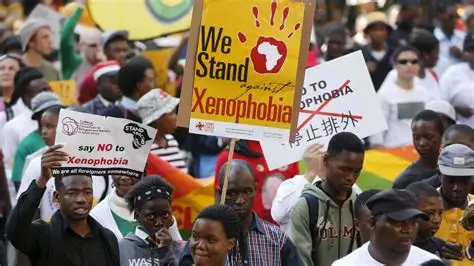
Ironically, these are the very countries that have become most hostile to migrants. Migration, once a source of labour and renewal, is now framed as a threat. Migrants are labelled “illegal,” “undesirable,” or “aliens,” and national policies increasingly reflect fear rather than confidence.
Take the United States as an example. Despite possessing one of the largest economies in the world, it has institutionalised migration as a national crisis. Long-standing immigration programmes have been curtailed, and public spending once justified by “great power” status has been reduced. These reactions are not signs of strength, but of insecurity.
Migration in Growing Economies: A Different Reality
During my recent visit to Kampala, Uganda, I observed a significant presence of migrants from neighbouring countries, particularly the Democratic Republic of Congo and Sudan. Curious about local attitudes, I inquired about public and governmental responses to this influx.
What I found was striking. Unlike in many so-called advanced economies, there was no widespread political campaign demonising migrants, nor a mass social backlash against foreign nationals. Migration was visible, yet not weaponised.
This contrast reveals an important insight. Uganda—and many countries like it—can still be considered growing economies. They have not yet reached their economic climax. As a result, population growth and migration are absorbed rather than resisted. Economic expansion, informal sectors, and available land create space for both citizens and newcomers.
In such societies, land remains accessible. Even in the absence of formal employment, people can survive through community farming, backyard agriculture, or informal economic activities. This reduces competition-driven hostility and social tension.
By contrast, in saturated economies where land is concentrated in the hands of a few, survival depends almost entirely on employment. When jobs disappear and land is unavailable, frustration grows. Migrants then become convenient scapegoats for deeper structural failures.
This leads to a critical question—one that demands serious reflection:
When economies stagnate and societies enter decline, what role do politicians choose to play?
The Politics of “Safe Landing”
Across shrinking economies—from the United States to parts of Europe and even South Africa—we are witnessing a noticeable shift in political strategy. In growing economies, aspiring leaders typically campaign on expansion: investing in production, creating jobs, and absorbing a growing population into a larger economic system. Growth is the promise.
In declining or stagnating economies, however, the narrative changes. Political ambition no longer rests on growth, but on damage control. The dominant message becomes simple and emotionally charged: your suffering is not structural; it is caused by foreigners. Vote for me, the argument goes, and I will remove them—your jobs, safety, and dignity will return.
This strategy has proven electorally effective. Donald Trump rose to power on precisely this platform. In France, figures such as Marine Le Pen and Éric Zemmour have built entire political identities around it. In South Africa, similar rhetoric has been deployed by populist figures who frame migrants as the root cause of unemployment and crime. Whether these claims are empirically accurate is almost beside the point. What matters politically is that blame replaces policy, and fear substitutes for vision.
History suggests a clear pattern: when politicians exhaust real solutions to economic decline, they redirect public anger toward outsiders. Migrants become the most convenient targets—visible, vulnerable, and unable to vote. But this raises a fundamental question: is this a sustainable political strategy, or merely short-term sensationalism? More importantly, what does such a politics produce twenty years down the line—renewal, or deeper fragmentation?
Long-Term Political Choices for Africa
African politics must avoid falling into this trap. The continent is not facing a “safe landing” moment; it is facing a take-off opportunity. To import the political logic of declining economies would be a historic mistake.
Yet the danger is real. Political opportunism knows no geography. Some African politicians may be tempted to imitate Western populist strategies, believing them to be a shortcut to power. This would repeat a familiar error: copying what appears to work elsewhere without understanding the context. Africa has often imitated systems, policies, and ideologies from societies that are themselves struggling with social decay, economic stagnation, and political paralysis.
Africa does not suffer from excess people; it suffers from insufficient economic organisation. Even without migrants, Africa’s own population is growing rapidly. Jobs must be created not for outsiders, but for Africans themselves. The central question, therefore, is not migration—it is economic structure, productivity, and institutional capacity.
Growth-oriented leadership demands creative thinking, not recycled fear. Economies that grow inevitably attract talent, skills, and resources—both domestic and foreign. China is a clear example: its rise was not built on exclusion, but on expansion. Migration followed growth, not the other way around.
Foreign nationals, then, are at most a peripheral issue. The core issue is the economy itself: how it is designed, who controls it, and whether it serves the collective future. That responsibility lies squarely with political leadership. Africa’s choice is stark but clear. It can borrow the politics of decline—or it can invent the politics of growth. The consequences of that choice will define the continent for generations.
