


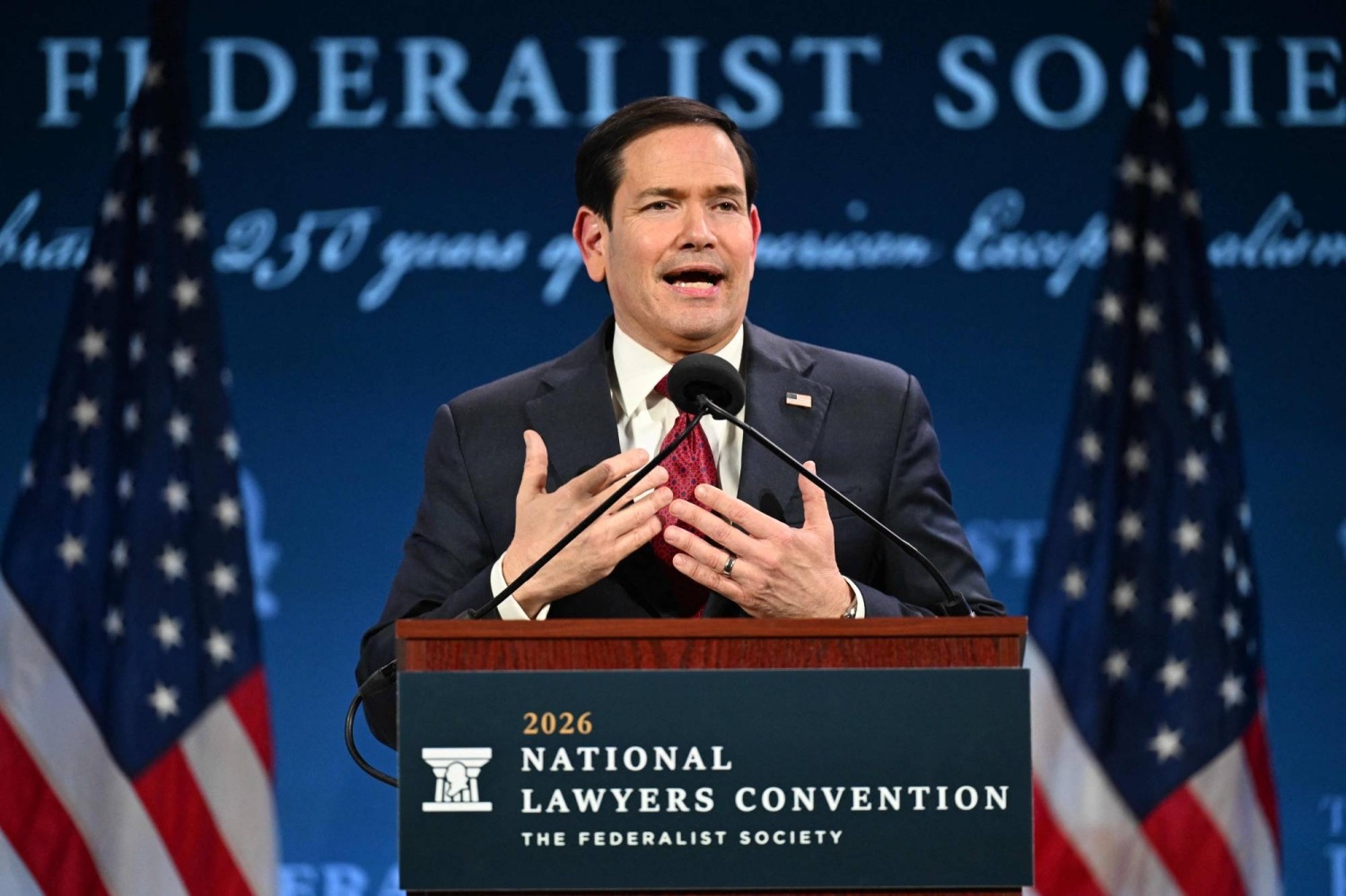
Reflections on the United States Secretary of State’s speech at the Federalist Society National Lawyers Convention, Washington, D.C., November 13, 2026.
By Kwame Gonza
Thinker, Engineer and Pan-Africanist
Architect – African Railway Triangle Network Master Plan (ARTNMP)
Listening to the United States Secretary of State’s recent speech, one cannot help but observe that the thinking of people like Marco Rubio appears rooted in the belief that the only way for the United States to reclaim its fading global power and influence is through the unapologetic assertion of its strength, the dismissal and undermining of the very international institutions it played a central role in creating, and from which it has benefited enormously for nearly a century.
In essence, the argument seems to be that the United States must abandon the principles, institutions and international arrangements that helped establish its global leadership and instead return to an era of unrestrained unilateralism, coercion and military aggression.
In light of his other speeches, including the one delivered at the Munich Security Conference in February 2026, one gets the impression that the historical realities of Western slavery, colonialism, territorial conquest, economic exploitation and military aggression must simply and unapologetically be brushed aside. The rest of the world is expected to forget, move on and unquestioningly accept a renewed American ambition to dominate international affairs, secure control over other nations’ resources and perpetuate its own prosperity and greatness at their expense.
Surprisingly, Rubio invokes the American Revolutionary War, led by George Washington, as an expression of the greatness of the American people and their indomitable spirit. Yet, when other peoples engage in armed resistance against foreign occupation and intervention, including those arising from military interventions periodically undertaken by the United States and Western powers, as witnessed in Somalia, Libya, Afghanistan and elsewhere, their struggles and political circumstances are often characterised through an entirely different lens, frequently labelled terrorism.
This raises a fundamental question about the double standards through which resistance, national liberation and the use of force are judged in international politics. Why should the historical resistance that established American independence be celebrated while the struggles of other peoples for self-determination are so readily dismissed or condemned, and in some cases portrayed as resistance to civilisation itself?
This kind of thinking, in today’s world, points not only towards the prospect of sustained international conflict and resistance to American imperial ambitions, but also exposes how outdated this conception of global power has become. Military technology is no longer the exclusive preserve of a handful of powerful nations. Its proliferation across the world has fundamentally altered the balance of capabilities and the nature of modern resistance. The assumption that military superiority alone can guarantee unquestioned global dominance is increasingly difficult to sustain.
Apparently, the whole world is expected to accept this arrangement and interpretation of international affairs willingly, without resistance or objection to what amounts to a deeply flawed analysis of the changing global order.
One is therefore reminded of the observations of Chinese political scientist Eric Li, who argues that we are entering, or have already entered, an era in which civilisations and cultures increasingly contest ideas, systems and models of development, while nations assert their sovereignty, identities and independent paths. Whether Rubio recognises it or not, the world is moving beyond the era in which one power could reasonably expect to dictate the terms of international relations to everyone else.
AFRICA MUST NOT WASTE THIS HISTORICAL OPPORTUNITY
For Africa, this changing international environment presents an extraordinary opportunity. We must move beyond rhetoric about continental unity and begin building the economic, technological, industrial, financial and infrastructural foundations of genuine sovereignty.
African countries must now look beyond the inherited and fragmented colonial state structures and work together, with urgency and determination, to initiate and execute ambitious continental projects on a scale capable of transforming our productive capacity and position in the global economy.
Continental railway networks, integrated energy systems, industrial corridors, technological institutions and an independent African financial architecture must become practical priorities rather than perpetual political promises, conferences and discussions.
We must also recognise that this window of opportunity will not remain open indefinitely. The emerging multipolar order presents Africa with greater possibilities for strategic partnerships, independent choices and the bold political restructuring necessary to overcome the limitations of its existing governance and economic arrangements. However, these opportunities will only translate into meaningful progress if we possess the collective vision, institutional capacity and political determination to seize them.
The current development model, under which African states have pursued largely fragmented national development strategies for decades, must be abandoned. This model has failed to deliver the industrial transformation, economic independence and collective bargaining power that the continent requires. Its continuation has also preserved economic relationships in which external powers and interests have often benefited disproportionately from Africa’s resources while the continent remains dependent on exporting raw materials and importing finished products.
Unfortunately, many within Africa’s intellectual establishment have become so accustomed to this development paradigm that questioning its foundations is sometimes treated as an unrealistic proposition. But Africa cannot achieve a fundamentally different future by endlessly reproducing the very model that has constrained its development for generations.
We must be prepared to challenge not only the external structures that perpetuate Africa’s dependency but also the internal political, intellectual and institutional arrangements that sustain them.
The question of who should lead such a continental undertaking, and through what political and institutional arrangements, deserves serious examination and debate. Leadership must be earned through vision, competence, commitment and the ability to advance the collective interests of African people.
Some of us are already working in this direction. The task now is to transform that vision into an organised continental movement capable of building the Africa we have long imagined.
Africa must not simply watch the old world order decline and wait for a new one to emerge. We must actively participate in shaping what comes next.
REFERENCES
- Secretary Marco Rubio’s keynote address at the Federalist Society National Lawyers Convention, November 13, 2026 – YouTube.
- Secretary Marco Rubio’s remarks at the Munich Security Conference, February 2026 – YouTube.
KWAME GONZA
Thinker, Engineer and Pan-Africanist
Architect – African Railway Triangle Network Master Plan (ARTNMP)
